Showing posts with label Brain Training. Show all posts

Friday, 15 November 2013

New Youth Enhancing Video Game

       Remember the days when your parents told you to stop playing so many video games? Well now they should start playing more video games. According to a study by Anguera et al. (2013) a video game called ‘NeuroRacer’ has the ability to improve multitasking, attention, and memory in older adults, so much so that they are more proficient than their younger counterparts in their 20's.
      
      Your ability to multitask steadily declines from your 20's until you're about 79, at which time you’ll probably have started to notice that you’re not as sharp as you used to be; puzzles seem harder, calculating the tip on your dinner bill takes you longer, you've forgotten your wallet at home more times that you’d like to admit, and some days you just can’t seem to stay focused. You may even catch yourself mentally-snarling at younger people, who seem like they're constantly on their phones while listening to music, while having a conversation, while eating dinner. Sounds horrible right? 

        Let’s face it, we now live in a technology-dense world, where multitasking has not only become a standard in our everyday lives, but it’s almost become a necessary skill to keep up with our fast paced environments. The bad news? The older you get, the worse you get. The good news? Video games can help!
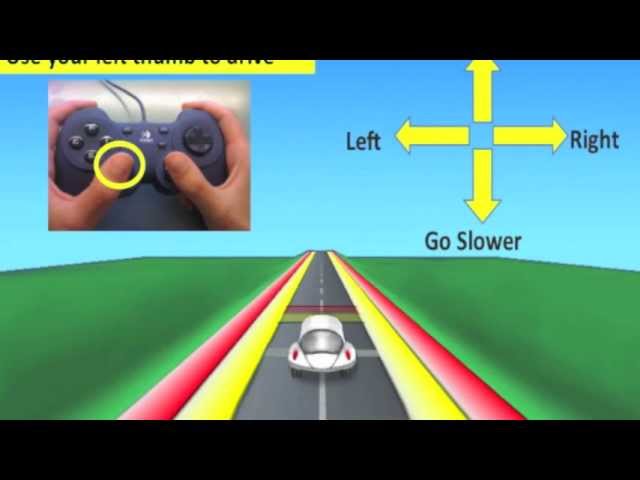
A screenshot of NeuroRacer
       Scientists have found that video game training with games like NeuroRacer, a driving game in which participants are asked to drive while shown different road signs for 1 hour every other day for 3-4 weeks, have helped older adults to learn how to eliminate the distractions in doing two things at once, increasing their ability to multitask, their memory, and their attention, as well as their response time while multitasking. When the participants were compared with younger video game players, the older participants actually scored higher in the game. The video game training also induced neuroplasiticity, or brain plasticity (the brains reorganization of itself throughout life by forming new connections), meaning that the video game helped the participant’s brains to re-wire themselves in a way that makes them more efficient at performing the tasks.

       So, when the day comes when you start feeling like you may not be the sharpest tool in the shed, it may be time to take a page out of your child’s book and turn on the video game console.

Interested in reading more? The article can be found by clicking on this link: http://www.nature.com/nature/journal/v501/n7465/abs/nature12486.html


J. A. Anguera, J. Boccanfuso, J. L. Rintoul, O. Al-Hashimi, F. Faraji, J. Janowich, E. Kong, Y.
       Larraburo, C. Rolle, E. Johnston, and A. Gazzaley (2013). Video game training enhances
       cognitive control in older adults. Nature:10.1038/nature12486
 

-Jesica Mikkila

Monday, 11 November 2013

Mario Really is Super: Have Fun Saving the Princess while Improving your Brain

If you watch a lot of television or are a frequent user of websites with commercials (such as YouTube), then you may have seen an advertisement for something called Lumosity. Lumosity is a subscription based “brain training” program that uses game-like exercises with the aim of helping one improve core cognitive functions (such as memory, attention, and processing speed). Yet while Lumosity (and other “brain training” games) aims to make brain training more fun and immersive, it is apparent that these programs are about training first and fun second. While this is not necessarily a bad thing, games designed in this way could be susceptible to losing their novelty quickly, at which point the only motivating factor for playing the game would be brain training (in contrast to playing a game because it is fun or novel). With this in mind, let us consider the following question: what do games designed for fun do for your brain?

In a recent study, researchers at the Max Planck Institute for Human Development in Berlin, Germany tested the effects of daily video game “training” on participants with little to no prior video game experience. In this study, 23 participants played the Nintendo DS version of the well-known game Super Mario 64 for at least 30 minutes a day over a two-month period. The researchers found that those who played Super Mario 64 over the two-month period (in comparison to a group of participants who did not) exhibited significantly larger grey matter increases (in comparison to no-increases or decreases) in brain areas associated with spatial processing and navigation (right hippocampus), motor skill acquisition (cerebellum), and the facilitation of relevant action based on sensory information, rules and rewards (dorsolateral prefrontal cortex). Furthermore, they found that these increases (in all but the motor skill acquisition brain area) were greater in participants who reported a stronger desire to play.

           As a result of this, the effects of video game engagement in cognitive training may be worth looking into further. Going back to Lumosity, one of the key scientific underpinnings of such training is the idea of neuroplasticity (which, put simply, means that our brain can change/develop based on what we expose it to…the more we do certain things, the better we become at them). In the study described above, the authors mention that there is evidence that increased dopamine (a chemical that helps control the brain’s reward and pleasure centers that can be increased through pleasurable activities) levels can be related to improvements in brain plasticity for some areas in the brain (including the right hippocampus and dorsolateral prefrontal cortex mentioned above). As such, the cognitive benefits that are inherently present in games like Super Mario 64 may be further facilitated by the fact that the game is enjoyable, rather than just a training experience.

            So why does this research matter and who does it matter to? Firstly, this research matters because it provides evidence that video games do not have to possess a ‘training first’ approach to contain cognitive benefits (although admittedly this would help in targeting the areas of the brain one wishes to train). Secondly (and possibly more interestingly), this research matters because it provides evidence that someone’s desire to play a game can also play a role in facilitating the process of neuroplasticity (and thus grey matter growth) in certain areas of the brain. When considering possible applications of these research, both of these points are worthy of consideration. For example, the second point could be of particular importance to educational software producers. If producers could find ways to incorporate specific aspects of cognitive training into the core aspects of a game that is fun and keeps people engaged, not only will they get people “training” longer, but the fact that people are having fun may further facilitate any cognitive benefits that the game would provide (improving results while blurring the lines between fun-first and training-first games). Furthermore, both points could also be important in developing clinical applications. For example, grey matter loss in some of the brain areas mentioned earlier has been associated with diseases like Alzheimer’s and schizophrenia. With regards to this, the researchers from the study above mention that the observed neuroplastic effects of video game training could mean that such training could be used in interventions that aim to counteract risk factors for mental disease. In this case, the engagement that video games provide could also be important, as patients may be more motivated to stick with a video game based treatment program in comparison to a traditional treatment program.

At the end of the day however, most people do not play video games for training, they play because it is fun, and with that in mind I say have fun exploring, racing, battling, solving puzzles, strategizing, and/or fixing the problems of a galactic civilization in whatever virtual world you like to play in, because you may gain more than just a smile on your face.

-Rylan Waring


Kühn, S., Gleich, T., Lorenz, R. C., Lindenberger, U., & Gallinat, J. (2013). Playing Super Mario induces structural brain plasticity: gray matter changes resulting from training with a commercial video game. Molecular Psychiatry. Advance online publication. doi:10.1038/mp.2013.120